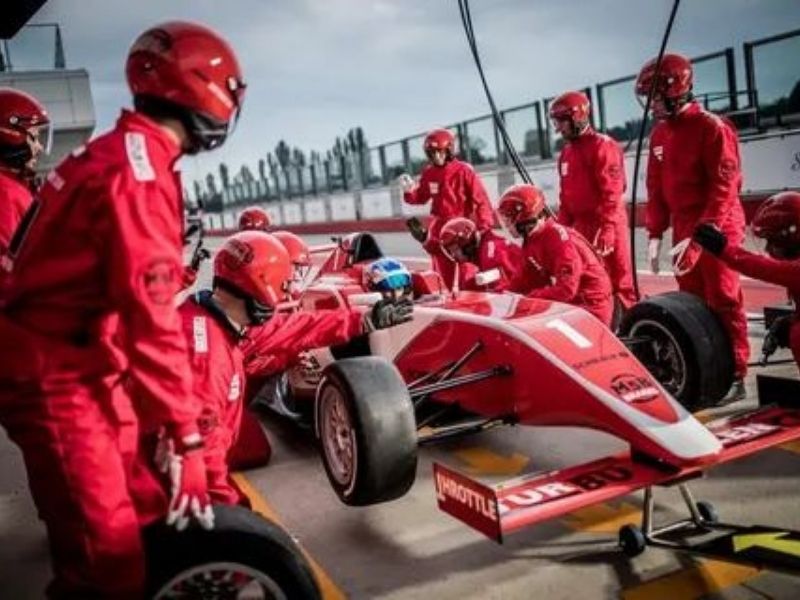
In Formula 1, a pit stop isn’t a break from the race. It’s what makes winning the race possible.
We borrowed the idea for a reason, and it now sits in the middle of our multi module management programmes. It’s a chance to regroup, put on some fresh “leadership tyres”, refuel and be ready for the road ahead.
Why leadership journeys stall
Leadership programmes rarely fail because the content was wrong. They fail because life gets in the way.
Three months after a great workshop, the notebook is closed, the intentions have faded and the day job has taken over again. Nobody decided to stop. The pace of daily work simply pushed the learning aside. Left alone, even the most motivated leader drifts back to familiar habits.
What a pit stop is
A pit stop is a short, focused touchpoint between the bigger modules of a programme. We build one into every learning journey, and it asks three simple questions:
- What have you tried?
- What’s working, and what isn’t?
- What do you need to keep moving?
There is no new theory and no long agenda. The purpose is to bring the leader back to their own progress, honestly and briefly.
Why such a small intervention matters
The three questions do quiet but important work.
“What have you tried?” creates accountability. It gently turns intention into action, because leaders know they will be asked.
“What’s working, and what isn’t?” makes room for honest reflection, including on what went wrong. This is where the real learning often happens, and it is rarely visible in a classroom.
“What do you need to keep moving?” turns reflection into support. It might be a conversation with a colleague, a decision from a sponsor, a bit of time protected in the diary, or a tool to try next.
Together, they keep ambition connected to action, so the journey doesn’t stall halfway through.
Momentum is designed, not hoped for
Many organisations invest in the big moments of development, the kick off, the workshop, the final session. Fewer invest in what happens between them, even though that is where behaviour actually changes.
If you are designing or buying a leadership programme, look at the gaps as carefully as the modules. Ask what will keep people going in the weeks when nothing is scheduled, and who will notice if the effort fades.
Development isn’t a straight line. Progress needs pit stops.
Would you like to build momentum into your leadership programmes? Get in touch with us to talk about designing a learning journey with pit stops built in.
Live Learning, rethinking the way we learn!